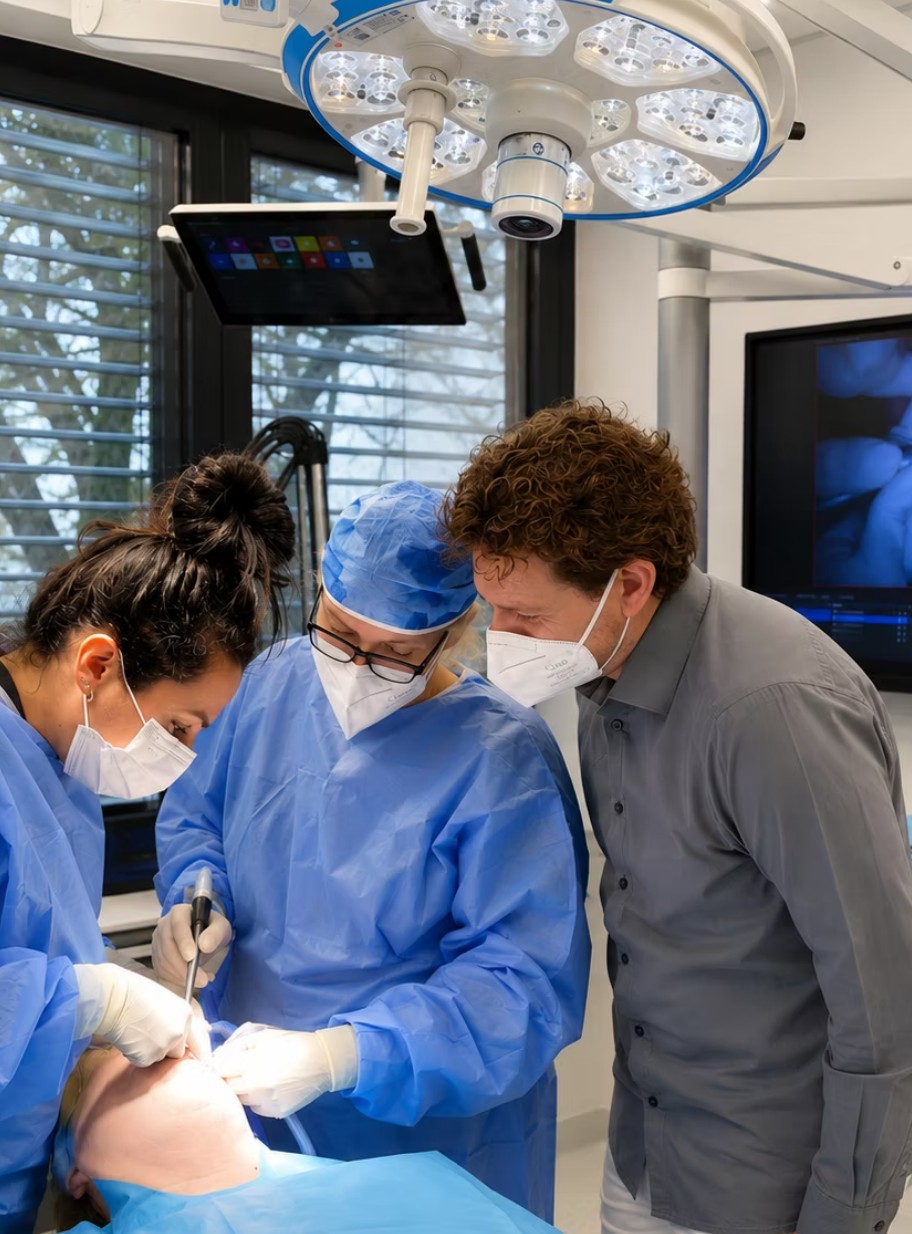
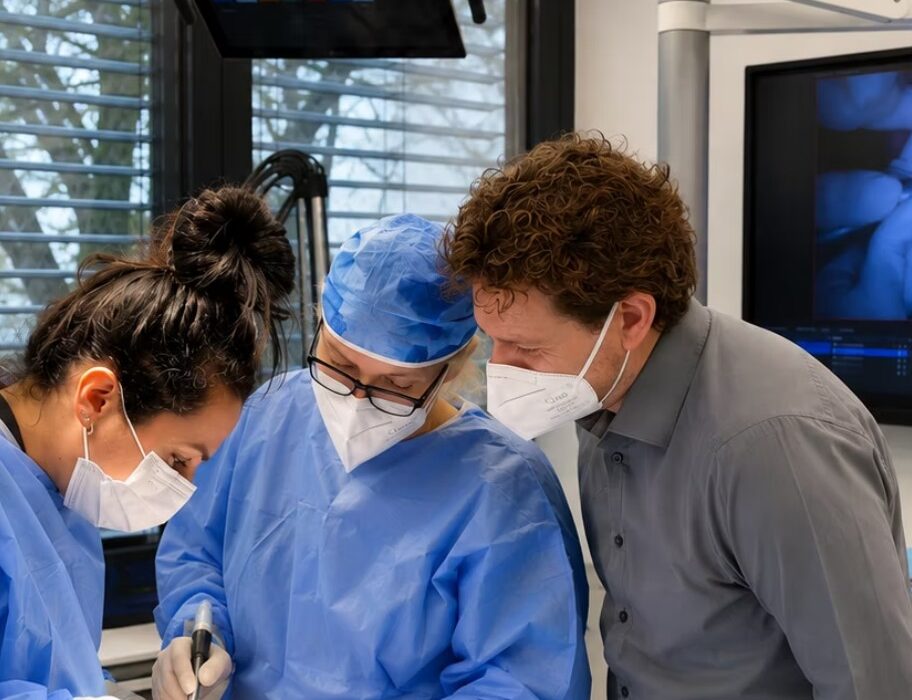
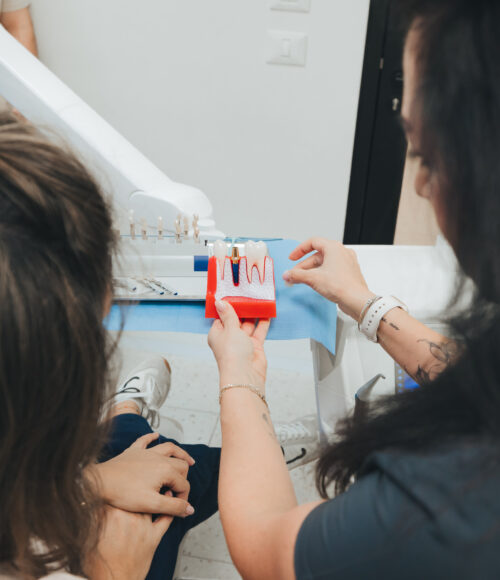
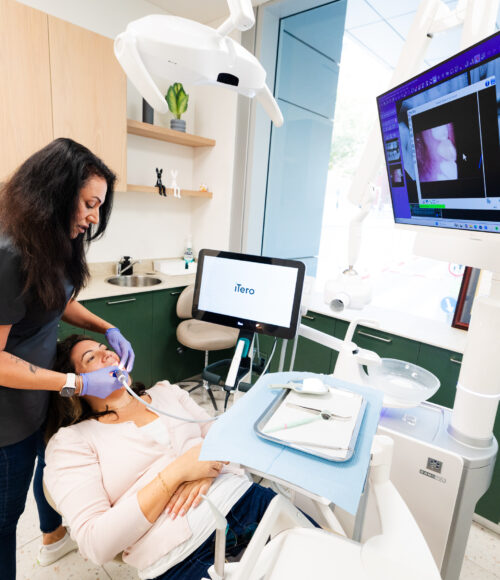
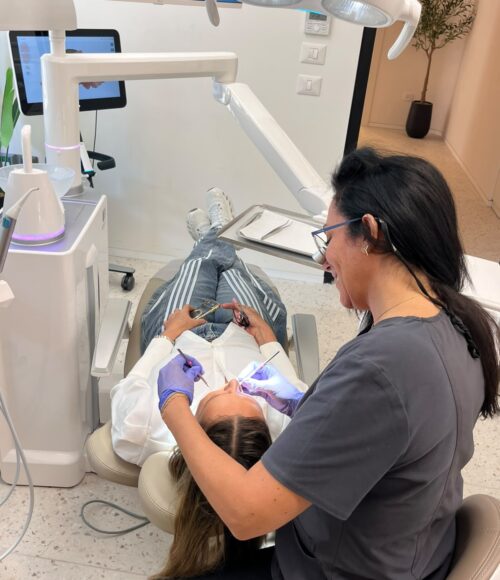
In selected cases, an implant can be placed through a small opening in the gum without raising a broad gum flap. This flapless approach may reduce the extent of soft-tissue intervention.
Suitability is determined at an individual examination. These signs alone are not a diagnosis.
01
Sufficient bone quantity and quality at the implant site
02
Gum anatomy that allows access through a small opening
03
No need for additional procedures such as bone augmentation
04
Medical circumstances and a restoration plan suitable for this approach
Four stages, a clear plan
This is how treatment usually progresses. The stages, timing and cost are tailored after an individual examination.
01
Clinical assessment
We examine your teeth, gums and bite and discuss your expectations.
02
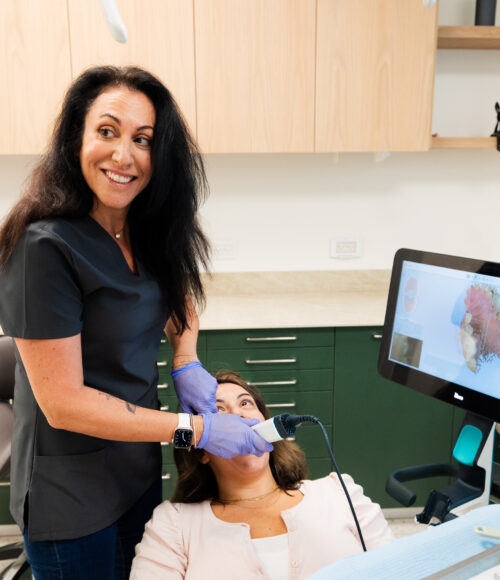
3D imaging and planning
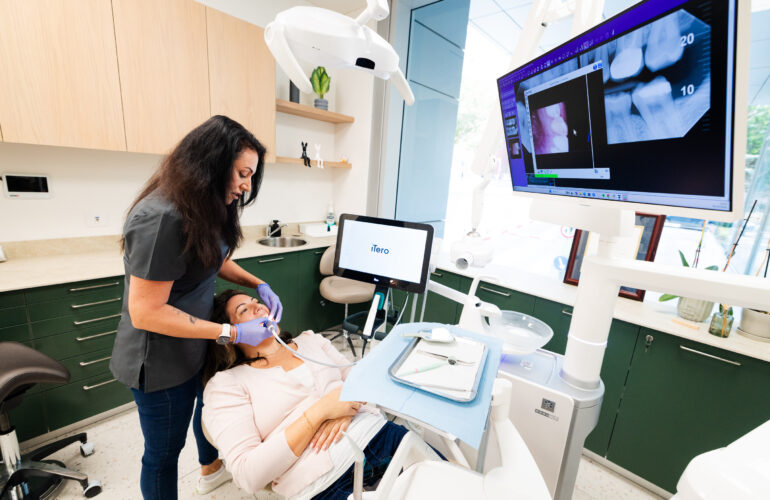
Three-dimensional imaging helps plan the implant’s position and angle in advance.
03
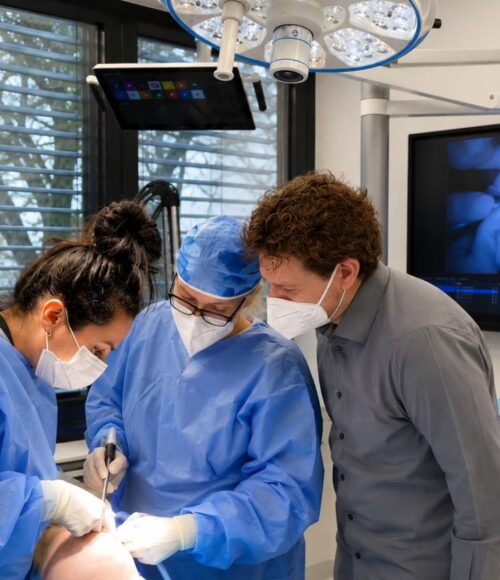
Placement through a small opening
The implant site is prepared and the implant placed under local anesthesia, without raising a conventional gum flap.
04
Follow-up and restoration
Healing is reviewed and the crown is fitted after the implant has integrated with the bone.
Care shaped around you
Implants through a small gum opening
Suitability depends on the bone and gum anatomy and the planned implant position. An examination and three-dimensional imaging help determine whether this approach or another technique is more appropriate.
Suitability is determined at an individual examination. These signs alone are not a diagnosis.
No. Suitability depends on bone quantity and quality, gum anatomy, nearby anatomical structures and the restoration plan. The decision follows a clinical examination and 3D imaging.
In suitable cases, the approach reduces the extent of gum opening and sometimes the need for stitches. Benefits and risks depend on the bone and gum anatomy. Recovery is not the same for every patient.
A conventional surgical approach is sometimes the better choice. It provides wider visibility and allows additional procedures such as bone augmentation. The choice is based on what is appropriate and safe for you.