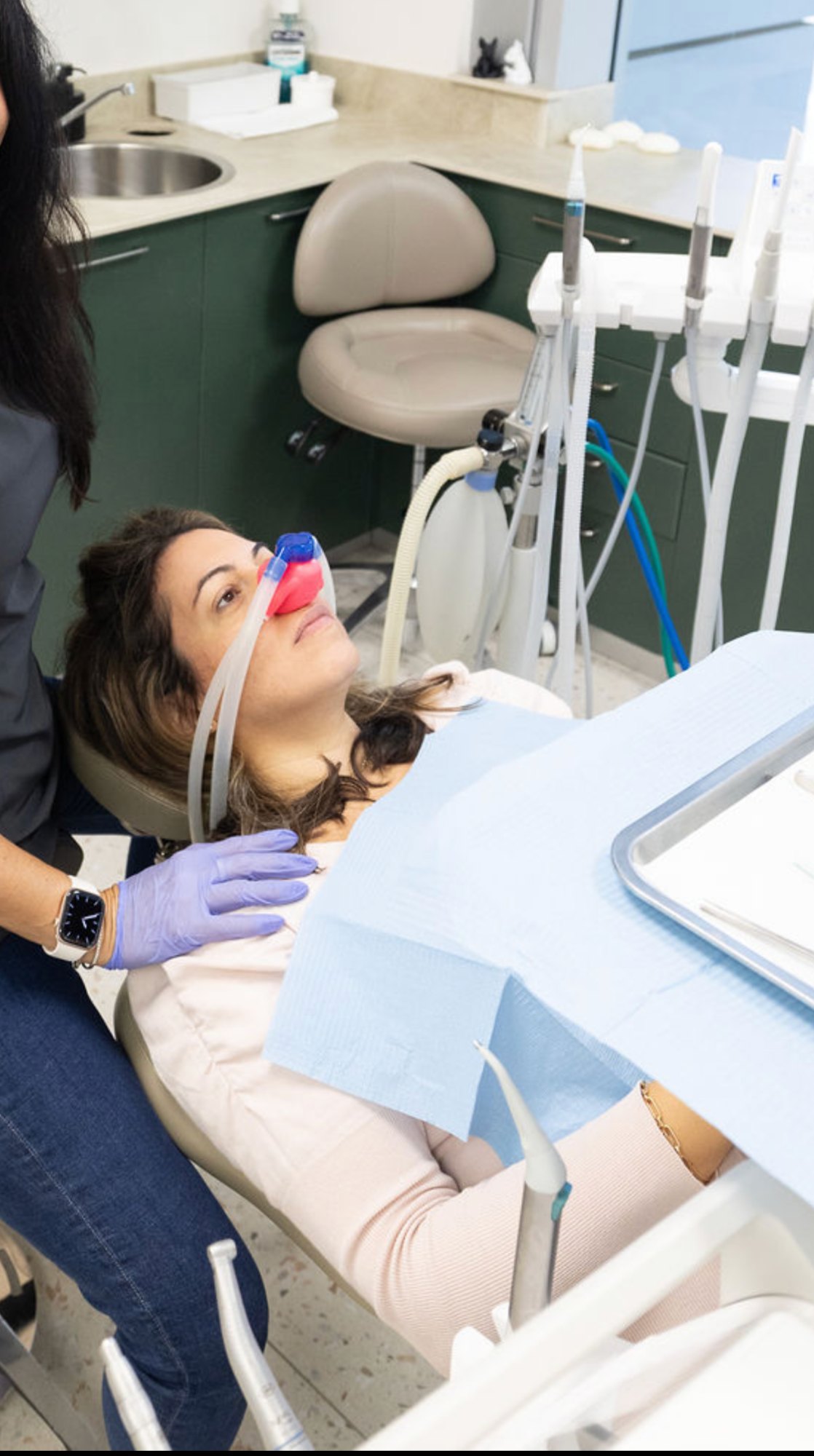
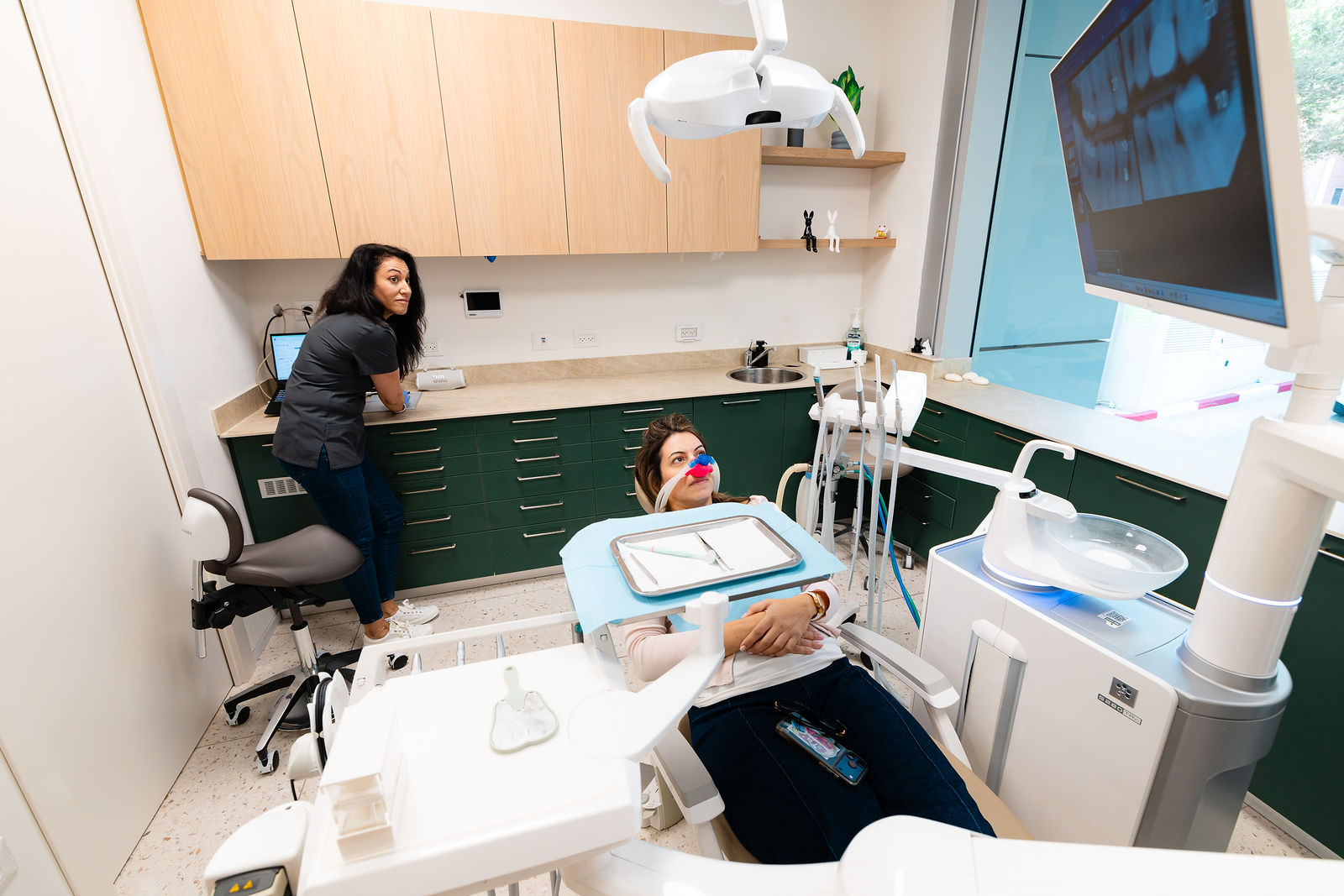
Nitrous oxide is given with oxygen through a small mask over your nose. It may reduce anxiety and help you feel more relaxed during dental treatment while remaining conscious and able to communicate with the team.
Suitability is determined at an individual examination. These signs alone are not a diagnosis.
01
Dental anxiety or fear of dental treatment
02
Children who need help relaxing in the chair
03
A strong gag reflex
04
Longer procedures, such as implants or rehabilitation
Four stages, a clear plan
This is how treatment usually progresses. The stages, timing and cost are tailored after an individual examination.
01
An initial conversation
Tell us about your concerns so we can plan suitable care.
02
Breathe normally
You breathe normally through a small nasal mask. A feeling of relaxation may develop within minutes.
03
Local anesthesia
Nitrous oxide does not replace local anesthesia. Numbing gel and local anesthesia are used where needed.
04
Recovery and instructions
At the end, nitrous oxide is stopped and oxygen is given. Recovery is assessed before discharge, with individual advice about driving and the rest of your day.
Care shaped around you
Reducing anxiety during dental treatment
Suitability is checked against your medical history and planned treatment. The dentist adjusts the gas concentration and monitors how you feel. Nitrous oxide does not necessarily replace local anesthesia. Recovery and return-to-activity advice are individual.
Suitability is determined at an individual examination. These signs alone are not a diagnosis.
Follow your dentist’s instructions after your recovery has been assessed. Do not assume you can drive immediately, especially if other sedative medication has been used. Ask in advance whether you should bring someone with you.