
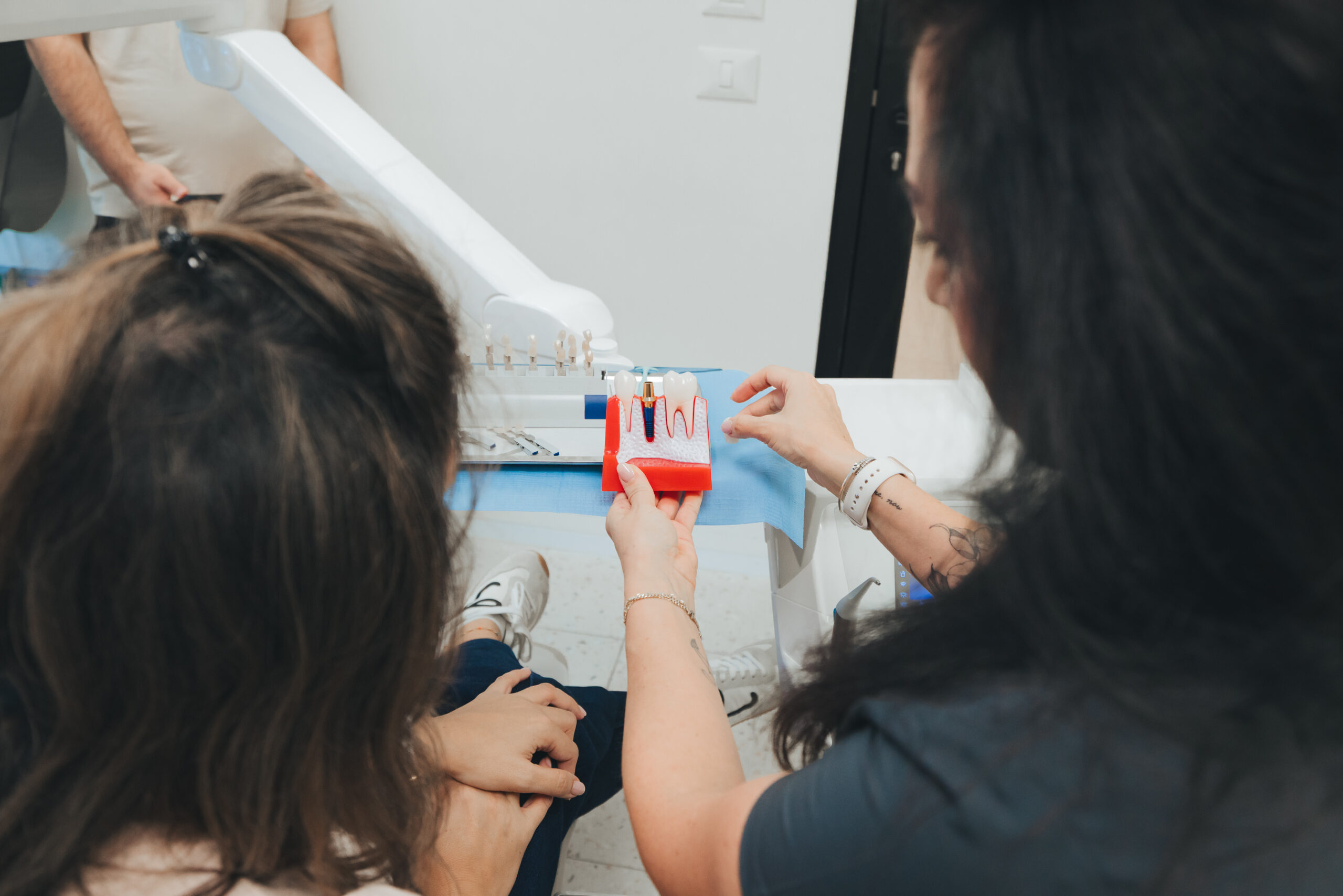
Dental implants and oral rehabilitation begin with an examination and an individual plan. When a tooth is missing, filling the space is only part of the picture. The restoration also needs to work with your bite, your smile and the surrounding teeth. Implants are one option for replacing missing teeth; suitability is assessed individually.
The implant is the foundation
A dental implant is placed in the jawbone to support an artificial tooth. A connecting component and a restoration, such as a crown, are attached above it. Several missing teeth may be replaced by an implant-supported bridge or another restoration. The number of missing teeth does not necessarily equal the number of implants needed.
When reviewing a treatment plan, ask what is included: surgery, connecting components, any planned temporary restoration and the final restoration. The word implant alone does not describe the whole process.
How is suitability assessed?
Your dentist assesses your mouth, gums and available bone, together with your general health. Mention medication, medical conditions and smoking, as these may affect healing and planning. Imaging and further tests are selected according to need.
Alternatives should also be discussed. A bridge or denture may be an option in some cases. If an existing tooth can still be treated, preserving it should be considered too.
Why is implant treatment carried out in stages?
After placement, the implant needs time to integrate with the bone. Healing may take months, with timing varying between patients. The restoration is then fitted and checked for bite and comfort. An early temporary restoration may be possible in selected cases, but it is not suitable for everyone and does not promise permanent teeth in a day.
Risks and long-term care
As with any surgery, there are risks, including infection, injury to nearby tissues or failure of the implant to integrate. Problems can also develop around an implant or within the restoration after treatment. Daily cleaning and follow-up visits are part of long-term care. Contact the clinic if an implant feels loose or painful.
Questions to bring to your consultation
- Which options are suitable for me, and how do they differ?
- Which stages are included in the plan and quotation?
- What will I have in place while healing?
- What could change the timeline, and what follow-up will I need?
Further reading
FDA: dental implants, what you should know
American Dental Association: dental implants
This article provides general information and does not replace an examination or individual advice. Options, treatment time and results depend on your oral and general health.